
How to Make Your Home Cosy 10 Simple Budget Friendly Ideas
Updated: Sep 8
A cosy home does not need a full makeover, a new sofa, or a basket full of things you bought because the internet told you to. Most of the time, the rooms that feel calm and welcoming have a few simple things in common: soft light, comfortable textures, less visual clutter, and personal details that make the space feel lived in.
That is very good news if life is busy and the budget is real!
The aim is not to create a perfect show home. It is to make ordinary rooms feel easier to relax in at the end of the day. A place where the lamp glow feels gentle, the sofa is actually comfortable, the kitchen counter is not shouting at you, and the small daily rituals feel a little more intentional.
If you have been wondering how to make your home cosy without spending a fortune, these ideas are a lovely place to start. They work through autumn and winter, but they are not only seasonal. A warm and inviting home is something worth enjoying all year round.
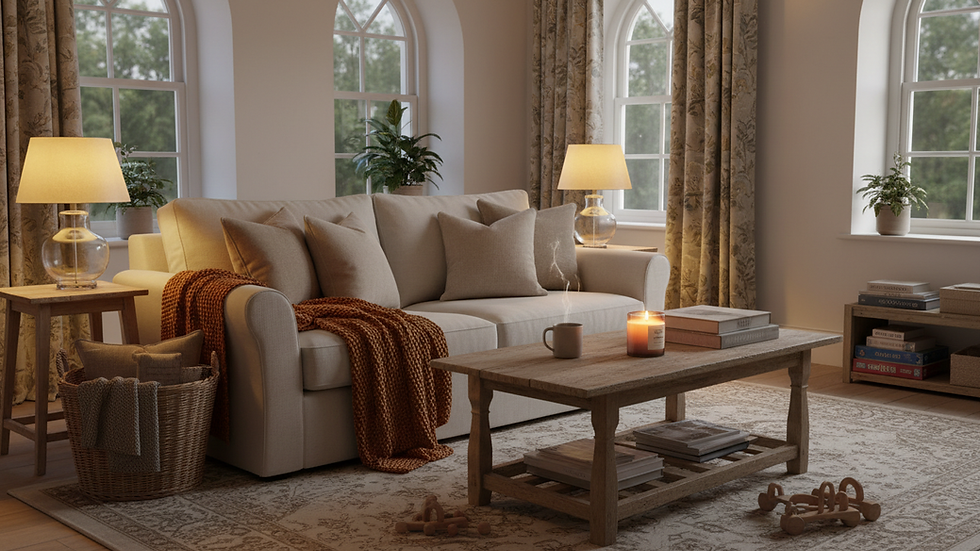
Start with Comfort Rather Than Buying More
Before changing anything, stand in the room and ask one simple question:
What is stopping this space from feeling calm?
It may be the overhead light. It may be too many things on the sideboard. It may be that the sofa looks nice but has no throw, no cushions, and nowhere to put a cup of tea.
This is where budget-friendly decorating becomes much easier. Instead of starting with “What should I buy?”, start with “What would make this room feel softer, warmer, and easier to live in?”
A cosy home usually comes from layering, editing, and adding meaning. You do not need to replace everything. You can often improve a room with what you already own, then add one or two pieces where they will make the biggest difference.
The ideas below are simple, practical, and easy to build over time.
1. Layer Your Lighting So the Room Feels Softer
Lighting is one of the quickest ways to change the mood of a room. A single ceiling light can make a space feel flat and harsh, especially in the evening. Cosy rooms usually have layers of light instead.
Think about creating small pools of light around the room. A table lamp on a sideboard, a floor lamp beside an armchair, or fairy lights tucked along a shelf can make the whole space feel gentler. Warm white bulbs often feel more relaxing than cool white ones, especially in living rooms and bedrooms.
For a budget-friendly approach, start with one lamp in the area where people naturally gather. That might be beside the sofa, near a reading chair, or on a console table in the hallway. Once that corner feels warmer, you can add another lamp later if needed.
A few simple lighting ideas include:
A small lamp on a kitchen counter for evening calm
Fairy lights in a glass vase or along a mantelpiece
A floor lamp next to the sofa for reading
Battery candles on a shelf where real candles are not practical
A warm bulb in an existing lamp you already own
The goal is not to make the room brighter. It is to make it feel more welcoming.
2. Add Soft Throws Where People Actually Sit
One of my favourite ways to introduce softness without changing the whole room is a throw. It is simple, useful, and can completely shift the feel of a sofa, chair, or bed.
A throw adds texture, warmth, and that gentle “come and sit down” feeling. It also makes a room look more relaxed without looking messy.
For a budget-friendly update, choose one throw in a colour or texture that works with what you already have. A warm oatmeal, rust, taupe, soft brown, cream, or muted olive can bring in that affordable autumn home décor feeling without making the room feel overly seasonal.
The key is placement. Do not fold it so perfectly that nobody dares use it. Drape it over the arm of the sofa, fold it over the back of a chair, or place it in a basket beside the fireplace or TV unit.
If you like pieces that feel both practical and pretty, an autumn blanket from my online shop is a lovely way to add softness without needing to redecorate the whole room.
A good throw should do two jobs: make the room look warmer and make real life feel more comfortable.
3. Use Cushions Strategically Rather Than Filling Every Corner
Cushions are one of the easiest cosy home decorating ideas, but they can quickly become too much. If the cushions end up on the floor every evening, there are probably too many.
A cosy living room does not need a mountain of cushions. It needs the right mix.
Try working with three things:
Texture
Size
Warm Colour
For example, on a plain sofa, you might use two larger neutral cushions at the back and one smaller textured cushion in front. If your sofa is grey, add warmth with beige, rust, soft caramel, olive, or cream. If your sofa is cream or beige, add contrast with muted brown, terracotta, or deep green.
Mixing textures can make even simple colours feel inviting. Think boucle, linen, cotton, velvet, waffle, cord, or chunky knit.
If you already have cushions, try swapping the covers rather than buying new inserts. Cushion covers take up less storage space and are usually much more affordable than replacing everything.
A quick test is to sit down and see whether the sofa still feels easy to use. A cosy room should never feel like a display you have to dismantle before you can relax.

4. Introduce Warm Neutral Colours in Small Ways
Colour makes a big difference to how a home feels. This does not mean painting every wall or changing every piece of furniture. Small touches of warm, nature-inspired colour can soften a room beautifully.
Warm neutrals include shades like:
Cream
Oatmeal
Stone
Taupe
Mushroom
Warm grey
Soft brown
Terracotta
Muted olive
Honey beige
These colours work well because they are calming, easy to layer, and less likely to date quickly. They also mix nicely with natural materials such as wood, rattan, linen, wool, and ceramic.
If a room feels cold, look at the colours that repeat most often. A lot of bright white, cool grey, black, glass, and chrome can sometimes feel crisp rather than cosy. You do not need to remove them all. Just balance them with warmer details.
Try adding a wooden tray, a beige lampshade, a rust cushion, a woven basket, or a warm-toned print. Even a simple bunch of dried stems in a brown glass vase can change the feeling of a shelf or table.
Warm colour works best when it appears more than once. If you add a terracotta cushion, repeat that tone in a candle, mug, print, or blanket nearby. The room will feel more pulled together without looking overly styled.
5. Create One Cosy Corner for Quiet Moments
A whole room makeover can feel overwhelming. A cosy corner feels possible!
Choose one small spot in your home and make it feel intentional. It might be a corner of the living room, a chair in the bedroom, a window seat, or even one end of the kitchen table.
A cosy corner only needs a few simple ingredients:
Somewhere comfortable to sit
Soft lighting
A throw or cushion
A surface for a drink or book
One personal detail
This is especially helpful in a busy family home, where every room often has more than one purpose. A cosy corner gives the eye somewhere calm to land. It also creates a small pocket of rest, even when the rest of the house is doing normal family life.
If you have children, it can become a reading corner with a basket of books. If you work from home, it can be the place you sit for ten minutes after closing the laptop. If evenings feel rushed, it can be where you drink tea once the washing up is done.
You do not need a spare room. You just need one small area that says, “This part of the day can slow down.”
6. Declutter Visible Surfaces So the Room Can Breathe
Clutter has a way of making a room feel busier than it really is. Even beautiful things can feel stressful when there are too many of them in one place.
Start with visible surfaces. These are the areas that affect the feeling of a room most quickly:
Coffee tables
Kitchen worktops
Bedside tables
Hallway consoles
Mantelpieces
TV units
Dining tables
You do not need to become a minimalist. The aim is to reduce the visual noise so the soft, cosy details can stand out.
Try the “clear and choose” method. Clear one surface completely, clean it, then only put back what is useful, beautiful, or meaningful. A lamp, a small tray, a candle, and a favourite photo may be enough.
Storage baskets are brilliant here because they hide everyday items while still looking warm and natural. Use them for blankets, toys, magazines, chargers, pet bits, or shoes in the hallway.
And if clutter is preventing your home from feeling calm, a Calm Home Planner from my online shop can help you break things into small, manageable steps. The goal is not a perfect home. It is a home that feels easier to live in.

7. Bring Natural Elements Indoors
Natural textures make a home feel grounded. They add warmth without needing lots of colour, and they work in almost every room.
Wood, rattan, wicker, linen, cotton, wool, clay, stone, and dried flowers all help soften a space. They also stop a room from feeling too shiny or flat.
You can bring nature indoors in very simple ways:
A wooden bowl on the dining table
A woven basket beside the sofa
Dried stems in a ceramic vase
A linen runner on a sideboard
Pine cones in a bowl during autumn and winter
A small plant on a windowsill
A bunch of eucalyptus in the bathroom.
If you are decorating a cosy home on a budget, look for natural pieces in charity shops, local markets, discount homeware sections, or even your own cupboards. A wooden chopping board can sit behind the hob. A spare basket can hold blankets. A ceramic jug can become a vase.
Natural elements also help a home feel seasonal without looking overdone. In autumn, you might use dried grasses, warm leaves, and darker woods. In spring, you might use lighter linens, fresh greenery, and soft floral stems.
This keeps your home feeling fresh through the year without needing a full seasonal reset.
8. Use Scent Carefully So It Feels Welcoming
Scent can make a home feel cosy before anyone even notices the décor. A soft, familiar scent can create a sense of calm the moment you walk through the door.
The trick is to use scent gently. Too many strong fragrances can feel overwhelming, especially in a busy home. Choose one scent direction and let it sit quietly in the background.
Warm, comforting scents often include:
Vanilla
Cinnamon
Cedarwood
Amber
Orange
Clove
Coffee
Soft cotton
Lavender
Sandalwood
Candles are lovely for evening atmosphere, but they are not the only option. Reed diffusers, wax melts, room sprays, simmer pots, and fresh herbs can all work well too.
Keep safety in mind with candles, especially around children, pets, curtains, and busy surfaces. Battery candles can still give a beautiful glow without the worry.
For kitchens, natural scent often works best. A clean sink, fresh tea towel, and a small bowl of oranges can feel more inviting than a strong air freshener. In bedrooms, keep scent soft and restful. In hallways, a subtle diffuser can make the whole house feel more welcoming.
A cosy scent should feel like part of the home, not the first thing anyone notices.
9. Create a Small Drinks or Coffee Station
A small drinks station can turn an ordinary morning into something that feels intentional. It does not need to be fancy. It just needs to make the daily cup of tea, coffee, or hot chocolate feel easier and warmer.
This is one of those cosy home ideas that works beautifully because it blends practicality with comfort.
You could use:
A tray on the kitchen counter
A small shelf near the kettle
A corner of a sideboard
A basket with hot chocolate sachets and marshmallows
A jar of coffee pods or tea bags
Favourite mugs within easy reach
A small mug and coffee station can also turn an ordinary morning into something that feels intentional. The Coffee & Cinnamon mug from my online shop would sit beautifully in this kind of space, especially if you love those warm, comforting kitchen moments.
Keep it simple. A tray, two mugs, a jar of coffee, and a candle nearby can be enough. If your kitchen counter is small, use a basket that can be moved when you need more space.
This little station can also change with the seasons. In autumn, add cinnamon sticks or hot chocolate. At Christmas, add festive napkins. In spring, keep it lighter with a small vase of flowers.
It is a small detail, but small details often shape how a home feels each day.

10. Add Personal Touches That Actually Mean Something
The cosiest homes are not always the most perfectly styled. They are the ones that feel personal.
A room can have beautiful cushions, expensive curtains, and carefully chosen colours, but still feel a little flat if nothing in it tells a story. Personal touches make a home feel warm because they connect the space to real life.
This does not mean filling every wall and shelf. Choose the pieces that genuinely matter.
A few meaningful ideas include:
A framed family photo in a simple wooden frame
A handwritten recipe from someone you love
Children’s artwork displayed neatly
A shell, stone, or small item from a favourite day out
A stack of well-loved books
A candle holder from a special trip
A print with words that feel grounding
A blanket used for film nights
A mug that makes quiet mornings feel special
Try grouping personal items with simple home décor so they feel intentional. A photo, candle, and small vase on a tray can look calm. A child’s drawing in a proper frame can become part of the room rather than something temporarily stuck to the fridge.
Meaningful does not have to mean expensive. Often, the things that make a home feel most comforting cost very little.
A warm and inviting home should reflect the people who live there. That is what makes it feel like yours.
A Simple Cosy Home Checklist
If you want a quick place to start, choose one room and work through this list slowly. There is no need to do it all in one day.
The home will start to feel calmer as these small choices build on each other.
Budget-Friendly Things Worth Looking For
If you are spending a little, focus on pieces that work hard and can move around your home. These tend to be better value than very trend-led decorations.
Good cosy home buys include:
Lamps that provide cosy mood light
Fairy lights for shelves, mantels, and bedrooms
Baskets for storage and texture
Cushion covers in warm, neutral shades
Throws for sofas, chairs, and beds
Candles or battery candles for evening glow
Storage trays for coffee tables and kitchen counters
Coffee accessories for a small drinks station
Simple home décor in wood, ceramic, glass, linen, or woven textures
Before buying something new, picture exactly where it will go. If you cannot name the spot, wait. Cosiness comes from thoughtful choices, not from filling every gap.
FAQ
What is the cheapest way to make a home feel cosy?
Start with lighting and decluttering. Turn off the harsh overhead light in the evening and use lamps instead. Then clear one or two visible surfaces so the room feels calmer. These changes can make a big difference before you buy anything.
How can I make my living room feel cosy on a budget?
Focus on the sofa area first. Add a soft throw, use a few textured cushions, place a warm lamp nearby, and keep a basket for blankets or toys. These simple cosy living room ideas make the space feel more comfortable without needing new furniture.
What colours make a home feel warm and inviting?
Warm neutrals usually work best. Try cream, oatmeal, taupe, stone, muted olive, terracotta, soft brown, and honey beige. These shades layer well and make a room feel calm without being dull.
How do I make a busy family home feel calm?
Give everyday items a clear place to go. Baskets, trays, hooks, and simple storage make a huge difference. Then add cosy touches where people actually spend time, such as the sofa, kitchen, hallway, and bedrooms.
Can a cosy home still be practical?
Yes! The best cosy homes are practical. Washable throws, easy storage, sturdy baskets, wipeable trays, and comfortable seating all make a home feel warm while still working for real family life.
Make Your Home Feel Cosy One Small Corner at a Time
You do not need to do everything at once. Choose one idea from this list and try it today. Add a lamp. Clear the coffee table. Fold a blanket over the sofa. Put your favourite mug beside the kettle. Frame one photo that makes you smile.
Small changes are often the ones that stay.
For more calm, homely ideas and simple inspiration, you can read more cosy home tips on my blog.
A cosy home is built through the way it feels, not the amount spent on it. Start with softness, warmth, calm surfaces, and details that mean something. The rest can grow gently from there.


Comments